
History & Life
Ephesus History and Daily Life
The marble city visible today is only one layer of Ephesus. Settlement moved as shorelines changed; a Hellenistic foundation supplied the street framework; Roman investment filled it with monuments; and later inhabitants reused, narrowed and rebuilt those spaces. The city did not simply “fall.” It changed scale, centre and purpose over centuries.
7 guides to the city's history

Follow the city through time
Four guides that set the sequence, from foundation to late reuse.
Chronology
Ephesus Timeline
A conservative chronology of Ephesus, from the prehistoric mound at Cukurici and the Middle Bronze Age settlement on Ayasuluk to the Hellenistic new city, Roman provincial capital, Christian pilgrimage centre and 2015 World Heritage inscription.
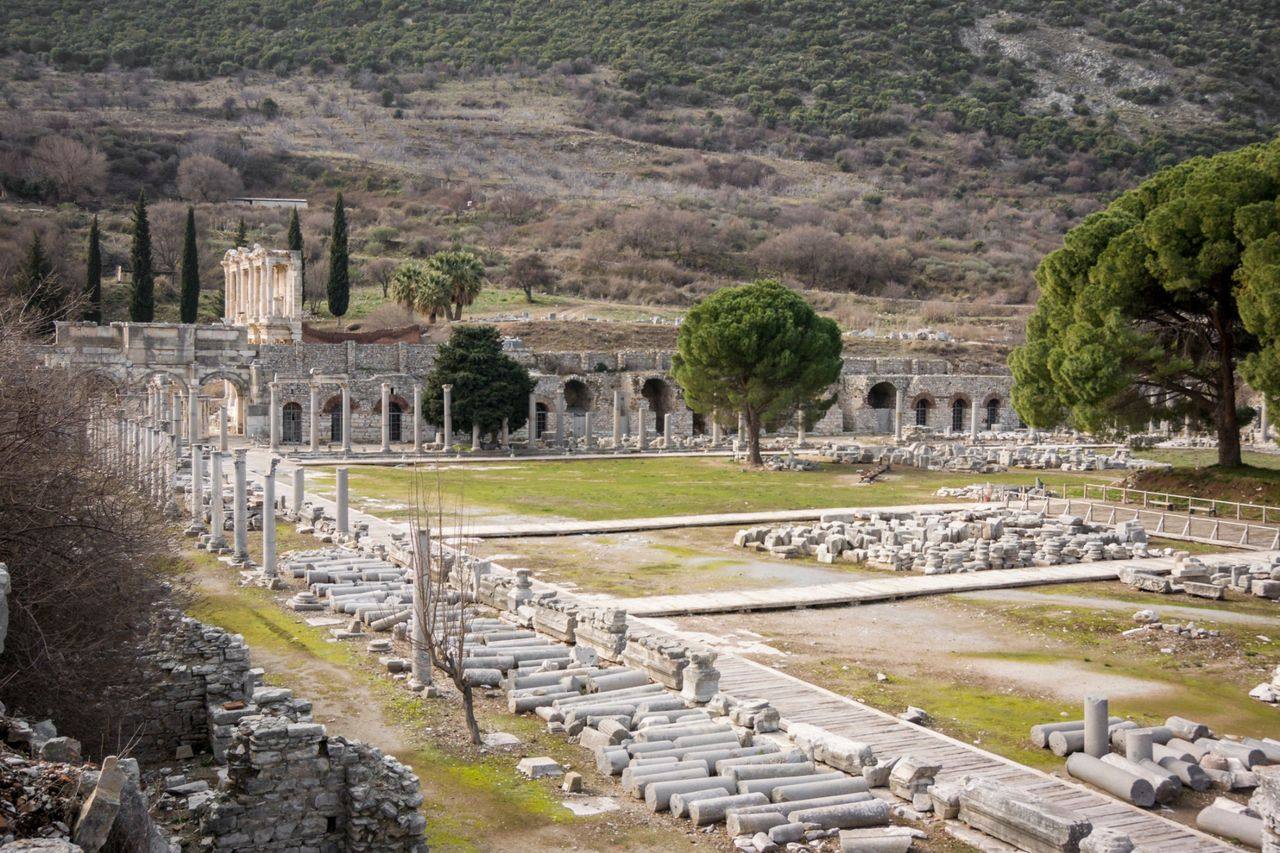
Foundation and plan
Greek and Hellenistic Ephesus
How the Greek and Hellenistic city shaped the Ephesus visitors walk today: the Ionian foundation, the move to the slopes below Panayirdag and Bulbuldag, and the street grid the Roman city inherited.
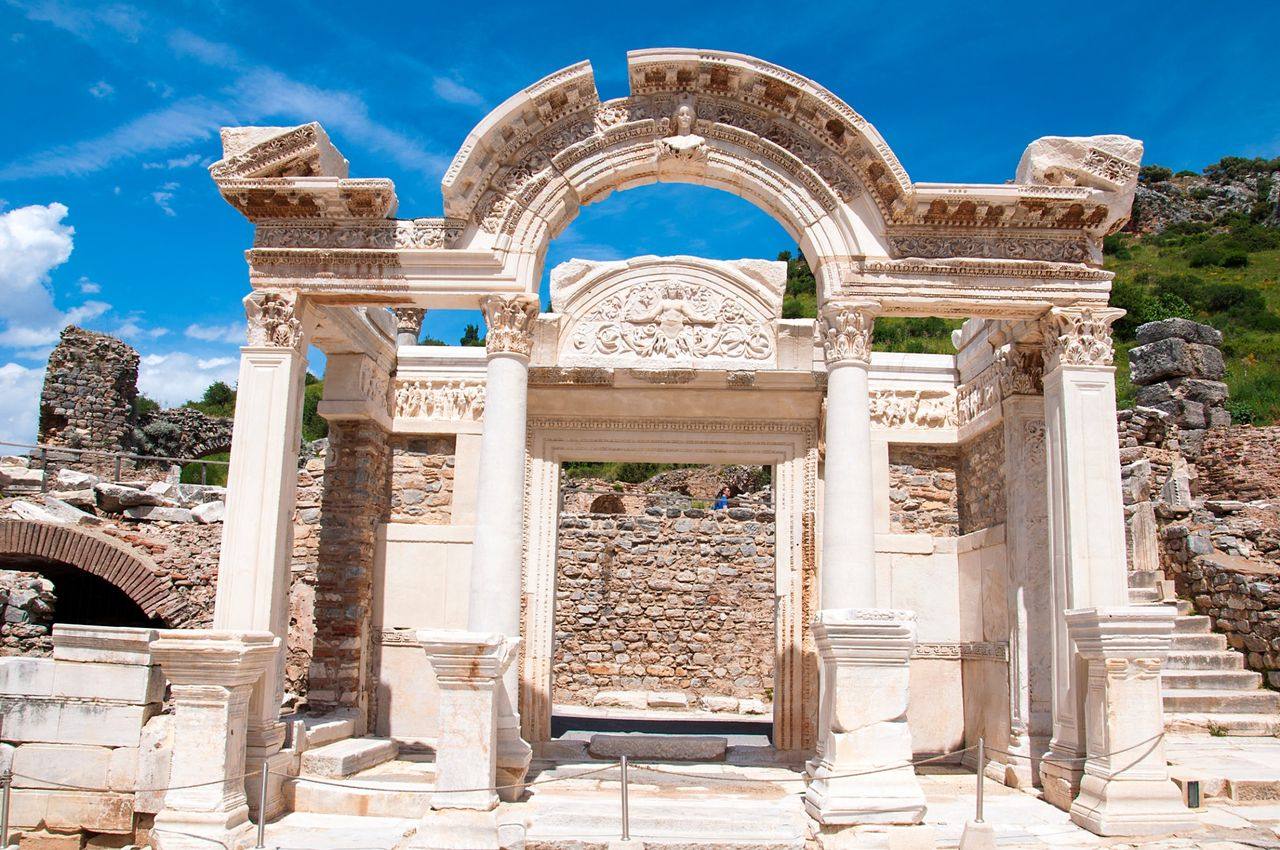
Provincial metropolis
Roman Ephesus
Ephesus as a Roman provincial city: the capital of the province of Asia, the marble streets, the Library of Celsus, the Terrace Houses and the civic buildings that make up most of what survives today.
Change and reuse
Byzantine Ephesus
The Byzantine city at Ephesus: church building, the shift of settlement towards the Ayasuluk hill at Selcuk, and the silting of the harbour that ended the ancient city's role as a port.

Recover everyday lives
What the buildings and texts show of households, food and labour.

Households and streets
Daily Life in Ancient Ephesus
What daily life looked like in ancient Ephesus: houses and households, water and drainage, baths and latrines, the agora and the streets, read from the buildings that survive on the site.
Food
Food and Dining in Ancient Ephesus
What people ate in ancient Ephesus and how they ate it: Mediterranean staples, the harbour trade, dining in the terraced houses and eating in public near the agora.
Labour and inequality
Slavery in Ancient Ephesus
Enslaved people were part of the economy and households of ancient Ephesus. What the Roman institution of slavery involved, how it shaped the city, and why it is not a footnote to the monuments.

Official sources
Current visitor information — opening hours, tickets and closures — is published by the site authorities, not by us.
- UNESCO World Heritage Centre — Ephesus (opens in a new tab)
The official World Heritage record for the Ephesus property.
- Austrian Archaeological Institute — the history of Ephesos (opens in a new tab)
Archaeological overview from the institute that excavates at Ephesus.
- OeAW-OeAI — Ephesos cooking research project (opens in a new tab)
Research on cooking vessels and household practice at Ephesus.
Continue exploring the Ephesus guide
Plan Your Visit
Practical orientation, official visitor information and preparation.
Ancient Ephesus
The monuments, streets and houses of the excavated city.
Faith & Mythology
Artemis, early Christian Ephesus and later sacred tradition, kept distinct.
Around Ephesus
Selçuk, Şirince and the wider region of western Anatolia.